
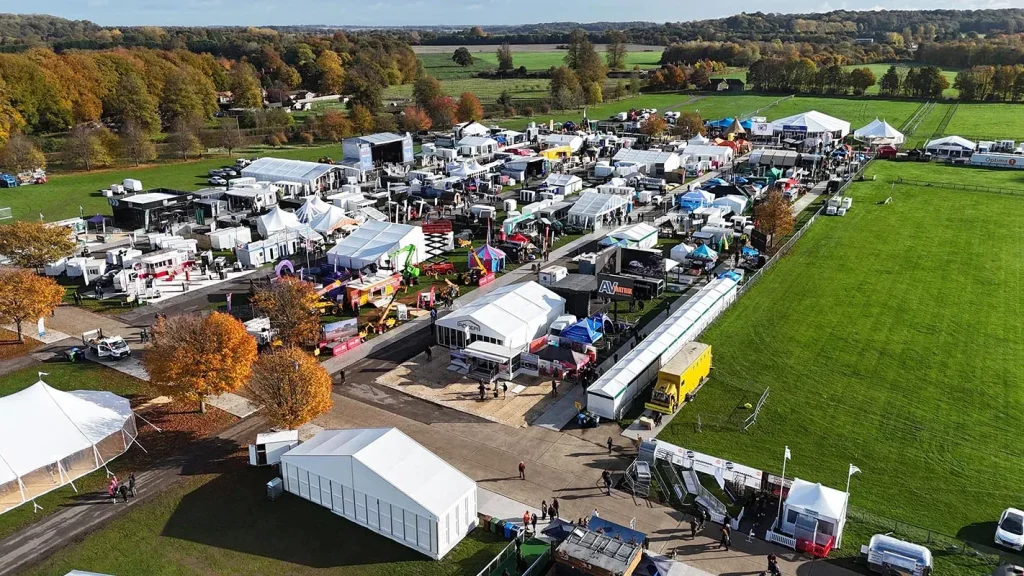
Doors are at four. At 3:40 the ticket scanners at the main gate are still showing a loading wheel, the bar manager is asking why none of the card readers will connect, and the sound engineer wants to know who promised the headliner’s team an internet line at front of house. The field looked perfect on the site visit. Nobody checked what a phone could do in it with eight thousand other phones standing nearby.
Outdoor shows are some of the best nights live music has to offer. They are also the hardest events to connect. An indoor venue comes with cabling in the walls and a network closet somewhere backstage. A park, a vineyard, a fairground or a beach comes with grass.
What actually needs a connection
Fans notice when they can’t post a video. That’s the least of it. The parts of a modern outdoor event that stop working without a network are the parts that take money and keep people safe.
The gate. Mobile tickets are scanned against a live database so the same barcode can’t get in twice. Scanners can cache a list and work offline for a while, but with several gates open, each one needs to know what the others have already let through.
The bars and merch. Plenty of festivals have gone fully cashless, with cards, phones or RFID wristbands the only way to pay. Coachella and Lollapalooza both run wristband systems. When payments stall, lines grow and people give up on that second drink or the tour shirt.
Production. Digital mixing consoles, lighting desks and video walls are increasingly run from tablets over WiFi. Artists’ crews ask for a line for show files and updates. If the show is being streamed, the encoder needs a steady upload for hours.
Operations. Security, medical teams, weather monitoring, staff messaging and the lost-child desk all lean on apps and shared documents. In a storm delay, that’s the network you most need to hold.
Why the phone network gives up
The cell tower nearest a rural field was built for the handful of people who live and drive near it. A tower shares its capacity among everyone connected. Put several thousand people in one place, all uploading clips of the same song, and each phone gets a sliver. Signal bars stay high because bars show signal strength, not how busy the tower is.
Carriers sometimes bring portable towers to the very largest festivals. For a 5,000-person show on a farm, don’t count on it. And terrain doesn’t help. Hills, tree lines and even a big stage structure can put half the site in a shadow.
The ways to bring internet to a field
There are four main routes, and bigger events usually combine two of them.
Bonded 5G. A router with SIMs for several carriers joins their signals into one connection. If one network is jammed, traffic leans on the others. It sets up in minutes and suits gates, bars and small production offices. Its limit is the same towers everyone else is using, so it works best with an antenna on a mast, above the crowd.
Satellite. Low-orbit services such as Starlink have changed what’s possible at remote sites. A dish needs open sky, so keep it clear of trees and stage roofs, and it needs power. Speeds are good for payments and office work. Capacity in a given area is shared, so it’s wise to test at the site on a busy evening.
Point-to-point wireless. If a building with fiber sits within line of sight (a winery office, a school, a grain elevator a mile or two away), a pair of small dishes can beam that connection to the field. It takes planning and a mast or roof at each end, but it delivers serious bandwidth.
Temporary fiber. For large festivals that return to the same grounds each year, a carrier can install a circuit. Lead times run to weeks or months, which rules it out for most one-off shows.
Once the connection reaches the site, it still has to be spread around. That means weatherproof access points on poles or truss, cable runs or wireless hops between them, and separate networks so the bar tills don’t compete with the artist lounge. Organizers who don’t want to engineer all this themselves can arrange outdoor event wifi with TradeShowInternet, where the backhaul, the access points and the on-site support come as one job.
Power, weather and mud
Every piece of network gear in a field needs electricity, and the nearest outlet may be a generator 200 feet away. Put network equipment on a battery backup so that a generator refuel or a tripped breaker doesn’t reboot the whole site. A router that takes three minutes to come back is three minutes of dead card readers at every bar.
Outdoor-rated equipment exists for a reason. Summer shows mean heat, dust and sudden rain. Gear should sit in ventilated, weatherproof cases, off the ground, with cables routed where forklifts and crowds won’t cut them. Lightning is a real risk for anything on a mast, so have a plan for lowering or grounding it when a storm cell shows up on the radar.
A planning timeline that works
Six to eight weeks out: walk the site with a phone from each major carrier and run speed tests. Note where signal drops. Ask the landowner what internet exists on the property and how far away it is.
Four weeks out: list every device that must be online, by area: gates, bars, merch, production, medical, office. Decide which of those can never go down. Book the connection and the equipment.
Load-in: get the network up first, before the bars and gates are set, so every vendor can test as they arrive.
Show day: keep attendee WiFi, if you offer it at all, apart from the working networks. Have one named person who owns connectivity and can be reached by radio.
Also brief the vendors. Tell them the network name, who to call, and that personal hotspots at every stall will only add interference. Turn on offline mode on payment devices as a safety net, and know its limits: payments taken offline can still be declined later, and the seller carries that loss.
Worth the line in the budget
Connectivity is easy to cut when the budget gets tight, because on a quiet site visit everything seems fine. Then the crowd arrives. An hour of failed payments at a few bars can cost more than the network would have. A gate that can’t scan turns into a crowd-safety problem within minutes.
Audiences will keep heading outdoors for music, and shows will keep leaning on phones, wristbands and tablets to run. The fields won’t grow their own infrastructure. So the question for anyone planning next summer’s calendar is a simple one: when the gates open, what is your event running on?
